How to Ship Sports Cards and Trading Cards
A step by step guide to packing raw cards, graded slabs and lots, choosing how to ship them, and insuring them in transit.
Whether you're shipping a $5 base card or a graded rookie, the method is the same: keep the card from bending, sliding or getting wet. Match the packaging and service to the card's value, and insure anything you can't afford to lose.
- The penny sleeve, toploader and team bag method
- When to use a PWE, a bubble mailer or a box
- How to ship graded slabs and bulk lots
U-PIC has protected shipments since 1989 for card shops, breakers and online sellers.
Get Started with U-PIC
Complete this form and an agent will be in touch shortly
Cards & Slabs
Raw cards, graded slabs and sealed wax you sell are covered in transit.
Significant Savings
Insure for 50 to 90% less than carrier declared value.
Paperless Claims
File online and get paid at invoice value once your claim is approved.
All Major Carriers
Coverage for shipments with USPS, UPS and FedEx.
How to Pack a Single Card
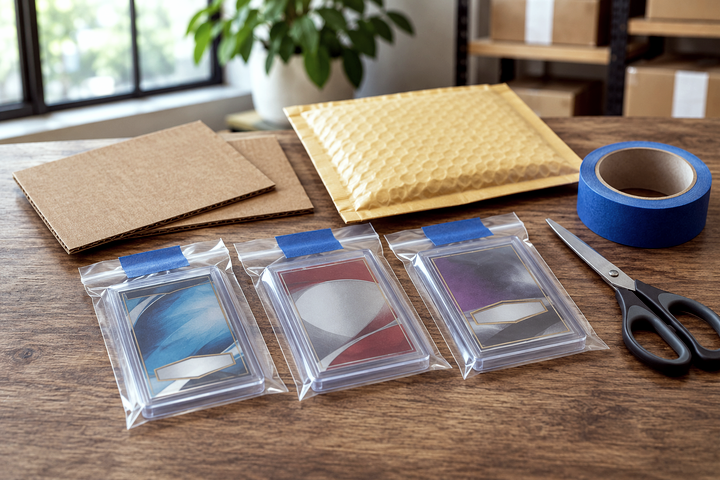
- Penny sleeve it. Slide the card into a soft penny sleeve to keep the surface from getting scratched.
- Put it in a toploader. Slide the sleeved card into a rigid toploader that fits it. Use a thicker toploader for thick patch or memorabilia cards.
- Seal it in a team bag. Put the toploader in a team bag and close it, which keeps the card from sliding out and adds a moisture barrier.
- Tape it with painter's tape. Use painter's tape on the outside of the team bag or toploader, never on the card or sleeve. It peels off without leaving residue.
- Make a cardboard sandwich. Place the toploader between two pieces of cardboard slightly larger than it and tape them together so the card can't bend.
PWE, Bubble Mailer or Box?
- Plain white envelope (PWE): only for low-value cards, and only when the buyer agrees. A PWE has no tracking, so if it goes missing there's no record of where it went. Mark it "non-machinable" and pay the non-machinable postage so it isn't run through sorting machines.
- Bubble mailer: the standard for a single card or a few cards worth more than a PWE. Fit the cardboard sandwich snugly in a small bubble mailer so it can't slide, mark it "Do Not Bend", and ship it with tracking.
- Box: for valuable cards, graded slabs, several toploaders or bulk lots. A small box with packing paper or bubble wrap around the cards protects them from being crushed.
How to Ship Graded Cards
- Sleeve the slab. Put each slab in a slab sleeve or bag to protect the case from scratches.
- Wrap it in bubble wrap. Wrap each slab in at least two layers of bubble wrap and tape the wrap, not the slab.
- Ship it in a box, not a mailer. Slabs can crack under pressure, so use a small sturdy box and fill every gap so nothing moves when you shake it.
- Add tracking and a signature. Choose a tracked service and require a signature for valuable slabs so they aren't left on a doorstep.
How to Ship Card Lots and Bulk
- A few cards: toploader each card, stack them face to face in one team bag, sandwich the stack in cardboard and ship in a bubble mailer or small box.
- Larger lots: stand the toploaders upright in a small box with cardboard dividers every few cards, and fill empty space with packing paper.
- Sets and bulk: ship cards in card storage boxes, filled or padded so the cards can't shift, inside a sturdier outer box with cushioning on every side.
Labels, Tracking and Signatures
- Plain labels: "Do Not Bend" is fine, but don't write "cards", a grading company or a player's name on the outside. A label that describes the contents makes a package a target, and U-PIC coverage excludes packages with descriptive labels.
- Tracking: ship anything you'd want to claim on with tracking, so there's a record of where the package went.
- Signature confirmation: require a signature on high-value cards. Marketplaces such as eBay also require it on higher-value orders for seller protection.
How to Insure Card Shipments
Carrier declared value is liability coverage, not insurance. U-PIC insures the cards you sell against loss, damage and theft in transit, at rates 50 to 90% less than typical carrier declared value. A claim is paid at the invoice value of the sale, so insure each package for what your buyer paid, plus shipping if you want shipping costs paid back too.
- Single sales: insure one package with Buy Now, no account needed.
- Card shops and regular sellers: see memorabilia and trading card shipping insurance for account coverage, what's covered and what isn't.
U-PIC covers cards you sell, and claims are paid at the price on the invoice between you and your buyer. Cards you send for grading aren't covered, since they aren't being sold. Coverage also excludes packages that are packed insufficiently, so the steps above protect both the card and your claim.
If a Card Arrives Damaged
Ask the buyer to photograph the package and the card before unpacking further, and to keep the card and all packaging until the claim is resolved. File your claim online within 90 days of the ship date with the invoice and a signed statement from the buyer. For domestic packages that never arrive, there is a 21-day waiting period before the claim is reviewed.
For the standard coverage this builds on, see our shipping insurance page.
Get Started with U-PIC
Insure the cards you sell for less than carrier declared value.