How to Ship Skis and Snowboards
A step by step guide to packing and shipping skis and snowboards to your customers, and insuring them in transit.
Skis and snowboards are long, and their edges, tips, tails and bindings take the hits in transit. Pack them so nothing can shift, protect every edge and end, and insure the shipment before it leaves your shop.
- How to pack skis base to base, and how to pack a snowboard
- Choosing a box and keeping DIM weight down
- How U-PIC insures ski and snowboard shipments for less than carrier declared value
U-PIC has protected shipments since 1989 for ski and snowboard shops, brands and resellers.
Get Started with U-PIC
Complete this form and an agent will be in touch shortly
Skis & Boards
New and used skis, snowboards, boots and bindings you sell are covered against loss, damage and theft in transit.
Significant Savings
Insure for 50 to 90% less than carrier declared value.
Paperless Claims
File online and get paid at invoice value once your claim is approved.
All Major Carriers
Coverage for shipments with UPS, FedEx and USPS.
How to Pack Skis for Shipping
- Clean, dry and photograph them. Make sure the skis are completely dry, since moisture sealed in a box can rust the edges. Photograph the bases, edges, top sheets and bindings to show the condition they left in.
- Strap up the brakes. Hold the ski brakes up with a ski strap, a rubber band or zip ties so they can't poke through the box, or remove them.
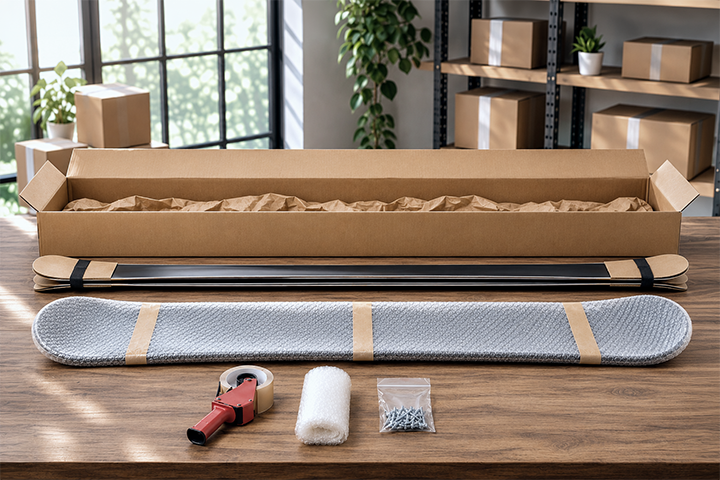
- Pack them base to base. Put the skis together base to base with a layer of bubble wrap or foam between them, so the edges can't scratch the bases, then strap them together at the tip and tail.
- Protect the tips, tails and bindings. Wrap the tips and tails in cardboard and bubble wrap, and pad around the bindings, which take the most pressure in the box.
- Use a ski box. Pack the skis in a ski box, which ski shops often have on hand. If it's printed with a brand or a picture of skis, cover the printing or use a plain box. Leave room for cushioning on every side. Fill the gaps until nothing moves, then tape every seam.
How to Pack a Snowboard for Shipping
- Clean, dry and photograph it. Wipe down the base and top sheet, let the board dry, and photograph it, including the edges and the nose and tail.
- Remove or pad the bindings. Taking the bindings off lets the board lie flat and fit a smaller box. Bag the screws and hardware together and tape the bag inside the box. If the bindings stay on, wrap them in foam.
- Cover the edges, nose and tail. Wrap the metal edges in foam or bubble wrap and tape it down, then add extra layers on the nose and tail.
- Wrap the whole board. Wrap the board in two or three layers of bubble wrap or foam.
- Box it with cushioning. Use a double-wall board box about 2 to 3 inches larger than the board on each side, fill the gaps with packing paper or air pillows, and tape every seam.
Shipping Boots, Poles and Bindings
- Boots: stuff the boots with packing paper so they hold their shape, buckle them, and ship them in their own box rather than loose against the skis or board.
- Poles: strap the poles together and pack them alongside the skis if they fit, padded so the tips can't puncture anything. Otherwise ship them in their own box.
- Loose bindings: wrap each binding on its own and keep the mounting hardware bagged with it.
Choosing a Carrier and Service
- DIM weight and length limits: ski and board boxes are long, so UPS, FedEx and USPS usually charge by dimensional (DIM) weight rather than actual weight. Use the most compact box that still leaves room for cushioning, and check your carrier's length limits for long skis.
- Ship ahead of peak season: November through February is the busiest time for ski and snowboard shipments. Ship early and allow extra transit time.
- Tracking and signature: choose a service with tracking, and require a signature on delivery for high-end gear so it isn't left on a doorstep.
- Plain labels: "Fragile" and "This Side Up" are fine, but don't write a brand or "skis" on the outside of the box. A label that describes the contents makes a package a target, and U-PIC coverage excludes packages with descriptive labels.
How to Insure a Ski or Snowboard Shipment
Carrier declared value is liability coverage, not insurance. U-PIC insures skis, snowboards, boots, bindings and other gear you sell, new or used, against loss, damage and theft in transit, at rates 50 to 90% less than typical carrier declared value. A claim is paid at the invoice value of the sale.
U-PIC covers goods you sell, and claims are paid at the price on the invoice between you and your buyer. Skis or a snowboard you ship for your own use, such as to a ski resort, are personal goods and aren't covered. See personal goods for details.
Coverage also excludes packages that are packed insufficiently, so following the packing steps above protects both the gear and your claim. Read the full terms on our coverage rules page.
If Skis or a Snowboard Arrive Damaged
Ask the customer to photograph the box and the gear before unpacking further, and to keep the gear and all packing materials until the claim is resolved. File your claim online within 90 days of the ship date. For domestic packages that never arrive, there is a 21-day waiting period before the claim is reviewed.
For more on covering the gear you sell, see shipping insurance for sporting goods, or our shipping insurance page for the standard coverage this builds on.
Get Started with U-PIC
Insure the skis and snowboards you sell for less than carrier declared value.