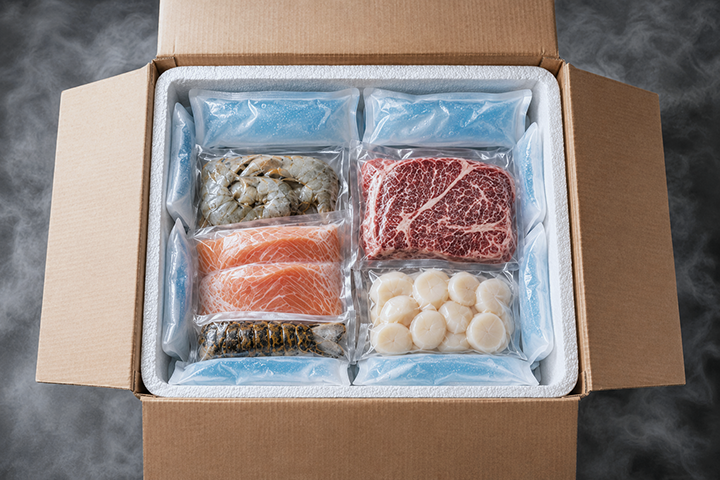
How to Ship Frozen and Perishable Food
A step by step guide to packing meat, seafood and frozen food so it arrives cold, and insuring it in transit.
Perishable food has a short window to arrive cold and safe. The right insulated packaging, the right refrigerant and a fast service do most of the work. U-PIC's perishable coverage protects the shipment if something still goes wrong in transit.
- Pack frozen and chilled food in an insulated shipper
- Choose gel packs or dry ice and follow carrier rules
- Ship overnight, early in the week
- Insure perishable shipments, including spoilage, with U-PIC's perishable endorsement
U-PIC has protected shipments since 1989 for food brands, meal kit companies, butchers and seafood sellers.
Get Started with U-PIC
Complete this form and an agent will be in touch shortly
Spoilage Covered
With the perishable endorsement, spoilage in transit is covered, not just loss and damage.
Carrier Delays
Covers spoilage from a carrier delay of more than 48 hours that's outside your control.
Significant Savings
Insure for 50 to 90% less than carrier declared value.
Paperless Claims
File online and get paid at invoice value once your claim is approved.
Before You Ship
- Plan for overnight: FedEx recommends its overnight services for temperature-sensitive items. If you use a slower service, your packaging and refrigerant need to keep the food cold for at least 24 hours past the delivery date.
- Ship early in the week: send perishable orders Monday through Wednesday, and avoid weekends and holidays, so a package doesn't sit in a warehouse over a day off.
- Chill or freeze first: freeze frozen items solid and chill refrigerated items before they're packed. Precool the cooler too, if you can.
- Check that it can be shipped: USPS treats perishable foods that can't reach their destination without spoiling as nonmailable, so very fragile or fast-spoiling items need an overnight carrier service.
How to Pack Perishable Food
- Seal the food. Vacuum-seal each item, or double-bag it in watertight plastic bags at least 2 mil thick, so nothing can leak as it thaws.
- Use an insulated shipper. Pack the food in a foam cooler with walls at least 1-1/2 inches thick, or an insulated liner made for food shipping.
- Add refrigerant around the food. Place gel packs or dry ice on top of and around the food, since cold air sinks. See the next section for which to use.
- Fill the empty space. Add a watertight liner and an absorbent pad, then fill any gaps so the food and refrigerant can't shift.
- Box it and tape it. Put the cooler inside a sturdy corrugated box and seal it with the H-taping method: at least three strips of 2 inch tape on the top and bottom, and along every seam.
Gel Packs or Dry Ice?
For most food shipments, gel packs are the simpler choice: they're easy to handle and carry no hazardous material rules. Use dry ice only when food has to stay frozen solid.
- Gel packs for chilled food: frozen gel packs keep food between 34 and 50 degrees F, which suits meat, seafood and dairy that should stay cold but not frozen. FedEx prefers gel packs to wet ice, because ice melts and leaks.
- Dry ice for frozen food: dry ice keeps food frozen solid, but carriers treat it as a hazardous material. Never seal it airtight, since it gives off gas that has to vent.
- Dry ice with FedEx: dry ice shipments need dangerous goods paperwork and labels, and they can't be dropped off at FedEx locations. See FedEx perishable shipping.
- Dry ice with USPS: a package going by air can hold no more than 5 pounds of dry ice and must be marked "Dry Ice, UN1845" with the dry ice weight and the name of the contents being cooled. See USPS dry ice rules.
Carrier markings and coverage: markings your carrier requires, such as "Perishable", "Keep Refrigerated" or the dry ice label, are part of the carrier's packaging requirements, so they don't count as descriptive labeling. When a carrier asks you to name the contents, keep it general, such as "seafood" or "frozen meat", and leave any other description off the box.
How to Insure Perishable Food Shipments
Perishable food is excluded from standard shipping insurance, so it's covered only when your account has U-PIC's perishable endorsement, for shipments sent with a 24 or 48 hour delivery service. With it, U-PIC insures food packed with its own gel packs or dry ice against:
- Loss, damage and theft in transit
- Spoilage from heating or freezing in transit
- Spoilage caused by a carrier delay of more than 48 hours that's outside your control
It doesn't cover spoilage from a late pickup or drop-off on your end, or from packaging that wasn't adequate for the trip, so pack well and hand packages off on time. Perishable food can't be insured through Buy Now.
See perishable goods coverage for how the endorsement works, or get started and an agent will set it up with you.
If Food Arrives Spoiled or Damaged
Ask the customer to photograph the box, the cooler and the food as soon as it arrives, and to keep the packaging until the claim is resolved. File your claim online within 90 days of the ship date, with the invoice between you and your buyer. For domestic packages that never arrive, there is a 21-day waiting period before the claim is reviewed.
Shipping plants or supplements that need to stay cold? See how to ship plants and supplement shipping insurance, or browse coverage for other industries.
Get Started with U-PIC
Insure the perishable food you ship, including spoilage in transit.