How to Ship Antiques
A step by step guide for auction houses and antique dealers shipping porcelain, glass, clocks, silver, framed pieces and furniture to buyers.
Antiques are fragile in ways new goods aren't: old glue, hairline cracks, loose joints and delicate finishes. Document each piece, pack it for how it's built, and insure the shipment before it leaves your hands.
- Packing steps for porcelain, glass, clocks, silver and framed pieces
- How to prepare and crate antique furniture
- How U-PIC insures lots shipped to winning bidders
U-PIC has protected shipments since 1989 for auction houses, antique dealers and estate sellers.
Get Started with U-PIC
Complete this form and an agent will be in touch shortly
Lots to Bidders
Antiques shipped to winning bidders and buyers are covered against loss, damage and theft in transit.
Significant Savings
Insure for 50 to 90% less than carrier declared value.
Paperless Claims
File online and get paid at invoice value once your claim is approved.
All Major Carriers
Coverage for shipments with UPS, FedEx and USPS.
Before You Pack
- Document the condition. Photograph every side, and note existing chips, cracks, repairs and wear, along with measurements and any removable parts. The photos show the condition the piece left in.
- Keep the paperwork together. Hold on to the invoice, and the auction record or appraisal if there is one. A claim is paid at the invoice value of the sale.
- Clean it gently. Dust with a microfiber cloth and skip chemical cleaners, which can damage old finishes while the piece is wrapped.
How to Ship Porcelain, China and Glass
- Protect the surface. Wrap painted, gilded or printed pieces in glassine paper first, which won't smudge or stick. Use plain packing paper for the rest, never newspaper, since the ink can transfer.
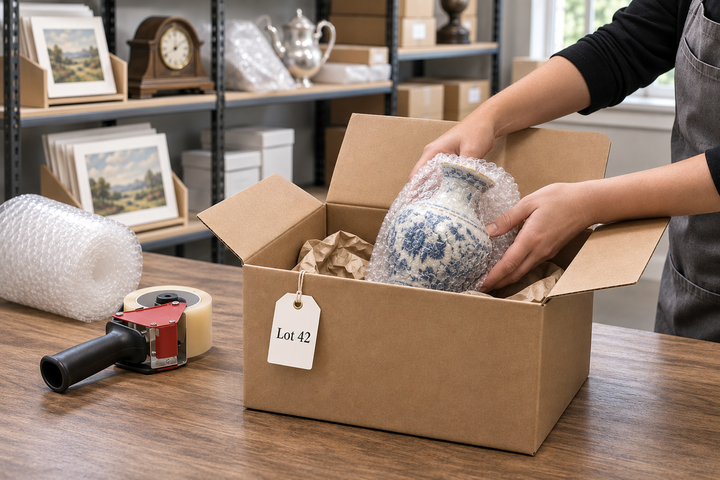
- Fill hollow spaces. Stuff vases, teapots and cups loosely with packing paper so the walls are supported from inside. Wrap lids, handles and spouts on their own.
- Add bubble wrap. Wrap each piece in at least two layers of bubble wrap covering every side, including the top and bottom.
- Separate pieces. Pack sets of china or glassware in a box with cardboard dividers so pieces can't knock together.
- Double box it. Center the inner box in a larger box with at least 2 inches of cushioning on every side, and fill every gap so nothing moves when you shake it.
How to Ship Clocks, Silver and Framed Pieces
- Clocks: remove the pendulum, weights and key and wrap each one separately, so nothing swings or strikes the movement in transit. Pad any glass door with cardboard.
- Silver: wrap each piece in acid free tissue, then bubble wrap, so the surface isn't scratched or tarnished. Keep pieces from touching one another.
- Framed pieces and mirrors: run an X of painter's tape across the glass, fit corner protectors, and ship in a telescoping box sized to the frame. See how to ship a painting or artwork for the full steps.
How to Ship Antique Furniture
- Remove what comes off. Take out drawers, shelves, glass panels and loose hardware and wrap them separately, labeled so they go back in place. Never force apart joints that weren't made to come apart.
- Secure doors with twine. Tie doors and drawers that stay in place shut with twine, not tape, which can lift old finishes.
- Protect corners and legs. Fit corner protectors on every edge, and pad legs, feet and carvings, which take the most damage.
- Blanket wrap it. Wrap the piece in moving blankets or furniture pads. Don't put shrink wrap directly on wood, since it can trap moisture against the finish.
- Crate valuable pieces. For valuable or fragile furniture, use a custom crate, and ship large pieces by freight rather than parcel. U-PIC covers freight shipments too, within your coverage limits.
Labels, Tracking and Signatures
- Plain labels: "Fragile" and "This Side Up" are fine, but don't write "antique", an auction house name or a description of the item on the outside. A label that describes the contents makes a package a target, and U-PIC coverage excludes packages with descriptive labels.
- Tracking and signature: choose a service with tracking, and require a signature on delivery for valuable lots so they aren't left on a doorstep.
How to Insure Antique Shipments
Carrier declared value is liability coverage, not insurance, and carriers limit how much you can declare for antiques. U-PIC insures antiques you sell against loss, damage and theft in transit, at rates 50 to 90% less than typical carrier declared value. A claim is paid at the invoice value of the sale.
- Covered: lots shipped from the auction house or dealer to the winning bidder or buyer.
- Not covered: items a consignor ships to the auction house, since they're shipped on consignment rather than to fill an order, and items you ship for your own use.
- Need an endorsement: original fine art, jewelry and furs are excluded unless endorsed in writing, and loose gemstones aren't covered. See art shipping insurance and jewelry shipping insurance.
Coverage excludes packages that are packed insufficiently, so following the packing steps above protects both the piece and your claim. Read the full terms on our coverage rules page.
Shipping Insurance for Auction Houses
U-PIC works with auction houses and antique dealers to insure the lots they ship after every sale, so you don't have to buy coverage one package at a time.
- One account for every sale: insure the lots you ship to winning bidders through a U-PIC account, reported weekly or monthly and billed on one invoice.
- Claims paid at invoice value: if a lot is lost, damaged or stolen in transit, the claim is paid at the invoice value of the sale.
- Clear lines on what's covered: lots shipped out to bidders and buyers are covered; items consignors ship in to you aren't.
- Lower cost than declared value: rates 50 to 90% less than typical carrier declared value, with claims filed online.
Get started and an agent will set up coverage around how your auction house ships.
If an Antique Arrives Damaged
Ask the buyer to photograph the box and the piece before unpacking further, and to keep the piece, every fragment and all packing materials until the claim is resolved. File your claim online within 90 days of the ship date. For domestic packages that never arrive, there is a 21-day waiting period before the claim is reviewed.
For the standard coverage this builds on, see our shipping insurance page, or browse coverage for other industries. Selling other collectibles too? See gifts and collectibles.
Get Started with U-PIC
Insure the antiques you sell for less than carrier declared value.